The Glendale City Council on May 26 authorized another year of ShotSpotter subscription services, marking Amendment No. 13 to the city's 2001 agreement with SoundThinking, Inc. The one-year renewal adds $62,849 to the contract, bringing its total authorized value to $807,054.
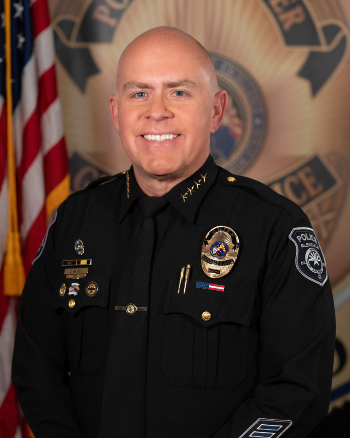
Police Chief Colby Brandt presented the staff report recommending extending coverage from September 1, 2026 through August 31, 2027. The report reveals a contract with unusual longevity, locked-in pricing, and a procurement process that has never been competitively bid.
A 25-year relationship
Glendale is one of ShotSpotter's oldest customers. The city first installed the acoustic gunshot detection system in 2001 at a cost of $277,500 for the hardware and $112,000 for four years of maintenance. The system covers two square miles — roughly 3% of the city's approximately 60 square miles.
In 2014, Amendment No. 1 converted the original contract to a Flex Services Agreement that upgraded the system to ShotSpotter's Flex Gunfire Alert & Analysis Service. The upgrade improved reporting, reduced false alerts, and — notably — did not increase annual maintenance costs. It also established the successive one-year renewal periods the city has used ever since.
The contract has been amended 13 times. SoundThinking, Inc. remains the exclusive provider of ShotSpotter technology; the city staff report notes the system was "originally procured through an approved sole-source process, as it was the only available technology of its kind at the time."
Legacy pricing
Glendale benefits from pricing locked in when ShotSpotter had few municipal customers. The city pays $28,777 per square mile for its two-square-mile coverage area. According to a 2024 GovTech report cited in the staff report, ShotSpotter typically costs $70,000 to $75,000 per square mile. Glendale's rate is about 60% less, saving the city roughly $92,000 per year compared to standard pricing.
Amendment 13 reflects a 10% increase over last year's $57,200 annual fee, consistent with recent annual adjustments. Notably, the $62,849 figure includes the city's 9.2% self-assessed tax on the $57,554 subtotal — the city assessing itself tax revenue on its own contract.
The total authorized amount for the full agreement now stands at $807,054, though individual amendments require separate council approval each year and are subject to budget availability.
Pricing history
| Year | Amendment / Action | Term | Annual cost |
|---|---|---|---|
| 2001 | Original Agreement C-4333 | — | $112,000 (4 yr maint.) |
| 2014 | Amendment 1 (Flex Services) | Successive 1-year renewals | — |
| 2017 | Extension | Sep 2017 – Aug 2019 | $29,400 |
| 2018 | Amendment 4 | Sep 2018 – Aug 2019 | $30,870 |
| 2019 | Amendment 5 | through Aug 2020 | $32,414 |
| 2020 | Amendment 6 | through Aug 2021 | $34,034 |
| 2021 | Amendment 7 | through Aug 2022 | $35,736 |
| 2022 | Amendment 8 | through Aug 2023 | $39,310 |
| 2023 | Amendment 10 | through Aug 2024 | $43,241 |
| 2024 | Amendment 11 | Sep 2024 – Aug 2025 | $52,500 |
| 2025 | Amendment 12 | through Aug 2026 | $57,200 |
| 2026 | Amendment 13 | Sep 2026 – Aug 2027 | $62,849 |
Amendments 2, 3, and 9 are not detailed in the May 2026 staff report. The 2017 extension was not numbered as a formal amendment in the report's history.
Annual costs have risen from $29,400 in 2017 to $62,849 for the upcoming term — more than doubling in a decade, with the most significant single-year jump between Amendments 10 and 11 (a 21% increase from $43,241 to $52,500).
Photo: Colby Brandt, Glendale Police Chief. Source: Glendale Police Department
National debate
ShotSpotter has become controversial nationally. A 2021 study by the MacArthur Justice Center found that in Chicago, fewer than 4% of ShotSpotter alerts resulted in an arrest, and fewer than 1% led to a conviction for a gun-related crime. Critics also point to cost: cities can spend hundreds of thousands of dollars per year on subscriptions.
The Glendale Police Department says the system reduces response times and helps find shooting victims who might not call 911. When the rooftop sensors detect gunfire, they triangulate the location and send GPS coordinates to dispatch, often before any 911 call comes in.