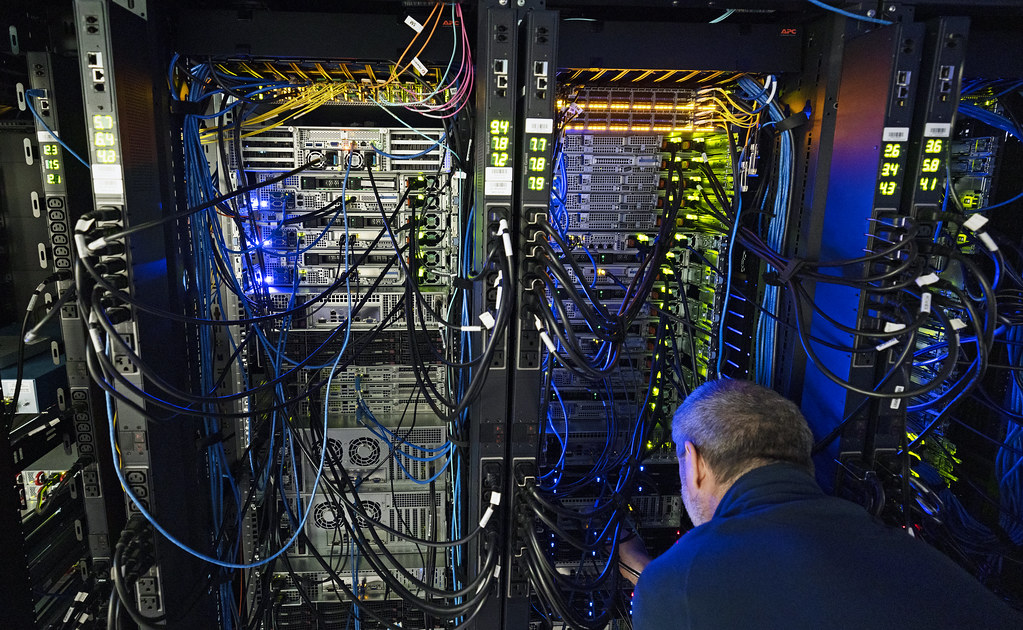
Data centers and utility-scale battery storage are arriving in the West Valley. Goodyear is trying to decide how to regulate them before large-scale development arrives.
The city’s Planning and Zoning Commission will take up a comprehensive update to the zoning code on Wednesday that would, for the first time, create dedicated standards for both development types. The proposed rules cover where these facilities can locate, how far they must be from homes, what noise they can produce, and what infrastructure they must provide. The commission is not expected to vote at this meeting; staff is seeking direction before drafting formal ordinance language the June 10 meeting agenda.
Why the rules are needed
Goodyear’s current zoning code was written before data centers and battery storage facilities became common development proposals across Maricopa County. Rather than approving each project through individualized reviews, the city is pursuing standards that would give developers and residents predictable rules.
The two uses raise different concerns. Battery storage facilities—which store energy from solar farms and other renewable sources—have prompted questions about fire safety, noise, and visual impacts when located near homes. Data centers require large amounts of land, electricity, and water, and their arrival has sparked debates about infrastructure capacity and compatibility with surrounding development.
Battery storage standards
Goodyear is proposing BESS regulations that would require utility-scale battery facilities to maintain a 330-foot separation from homes, reducible to 150 feet with city approval. The rules would also mandate screening, underground utilities, noise monitoring, and a decommissioning plan. Battery facilities would be limited to industrial zones as a special use; residential properties would be exempt.
The 330-foot residential setback is more permissive than some neighboring cities. Buckeye requires 1,000 feet. Surprise requires 1,500 feet. Mesa requires 150 feet. The variation reflects that municipalities across the region are still determining what level of separation is appropriate.
Data center standards
Goodyear’s proposed data center standards would allow the facilities in mixed-use and industrial districts with a use permit. They would need a 300-foot setback from homes, screened equipment, underground utilities, and compliance with noise limits. Applicants would be required to document their electricity and water sources.
Data centers draw significant amounts of power and water, and Goodyear’s proposed rules reflect a growing awareness among Valley cities that these impacts need to be addressed upfront. Phoenix requires facilities above 50,000 square feet or 50 megawatts to go through a use permit process. Chandler permits them in its I-1 and I-2 industrial zones with conditions. Several cities—including Scottsdale, Glendale, and Peoria—still rely on general industrial zoning without dedicated data center standards.
The draft zoning code includes framework sections for both data centers and battery storage, but the specific standards are currently marked “RESERVED.” Staff is seeking commission direction before filling in the final language.
Public notice changes
The update would also revise how and when the public is notified about development applications. Specific details have not been released.
What’s next
The discussion begins at 6:00 p.m. on Wednesday, June 10, at Goodyear City Hall Council Chambers, 1900 N. Civic Square. A formal ordinance would return for a public hearing and vote at a future meeting.