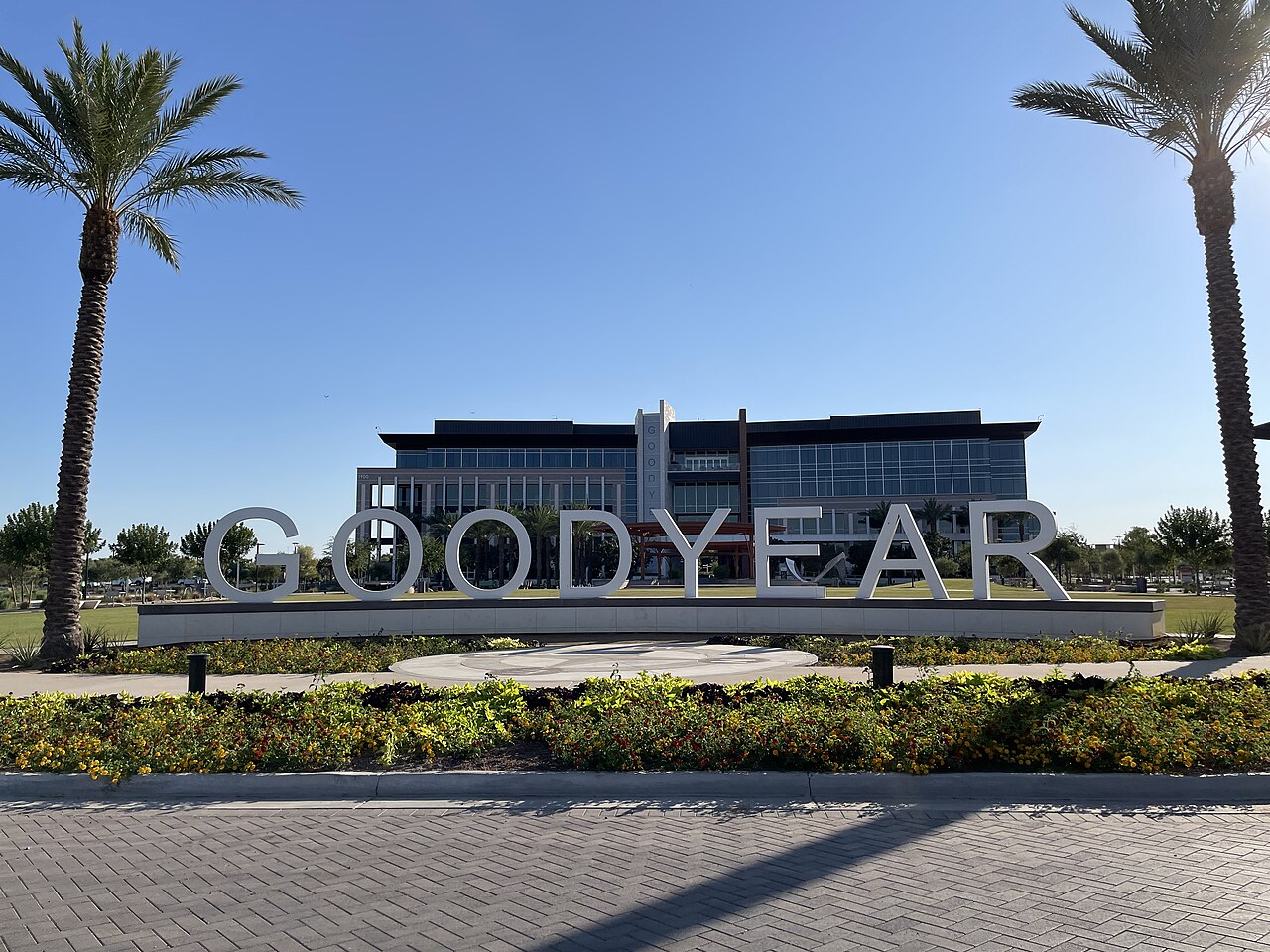
The Goodyear City Council will receive an update Monday on a comprehensive rewrite of the city's zoning code — the first full rewrite since 1999. The Planning & Zoning Commission will hold a public hearing and recommendation vote on July 1, with council adoption scheduled for July 6. The work session, where council gives direction but takes no vote, comes before those hearings. (Meeting link)
The most consequential changes in the draft code involve housing.
Housing changes
Missing-middle overlay. Within one mile of the city's Middle Housing Central Business District, duplexes, triplexes, fourplexes, and townhomes would be permitted by right on single-family lots — meaning no rezoning or special permit would be required. The parking minimum drops to one space per unit, well below typical single-family requirements. No more than 20 percent of any new development site over 10 contiguous acres can be middle housing.
"Missing middle" refers to housing types that fall between single-family homes and large apartment complexes — duplexes, triplexes, fourplexes, and townhomes — that have become increasingly rare in cities that restrict residential construction to detached single-family houses.
Accessory dwelling units. ADUs — sometimes called granny flats or casitas — would be allowed on single-family lots up to 75 percent of the primary dwelling's floor area or 1,000 square feet, whichever is smaller. Setbacks are five feet. No additional parking is required.
Multi-family parking reform. The draft code reduces parking requirements to one space per unit for studios and efficiencies, 1.5 spaces for one-bedroom units, and two spaces for units with two or more bedrooms.
BESS and data center regulations
The proposed regulations for battery storage and data centers aim to catch up with uses that have proliferated across the West Valley without dedicated city standards.
Battery storage would require a Special Use Permit in industrial zoning districts only, with a 500-foot minimum separation from residential uses and 150 feet from commercial and industrial. By comparison, Mesa requires 330 feet (reducible to 150), Surprise requires 1,500 feet, and Phoenix requires 1,000 feet. Operators would need to comply with UL 9540 and NFPA 855 safety standards and provide a hazard mitigation analysis, decommissioning plan, and emergency response plan.
Data centers would be permitted uses in industrial districts with conditions, including a 300-foot setback from residential uses and 100 feet from commercial and industrial. The code would prohibit using potable water for cooling and require backup power generators to meet noise limits using Tier IV diesel engines for emergency use only. Parking would be reduced to one space per 5,000 square feet. By comparison, Chandler requires 400-foot residential setbacks, Phoenix requires 2,640 feet, and Marana requires 500 feet with a water use plan and "extreme-water use" designation.
Staff noted that several Valley cities — including Scottsdale, Glendale, and Peoria — do not have standalone data center ordinances and regulate them under existing industrial standards. Gilbert is currently drafting its own data center text amendment.
Process and timeline
The rewrite kicked off in January 2025. The city hired Michael Baker International as the consultant, while a separate firm — Matrix — is working under a Housing Opportunities in Mentorship and Education (HOME) Technical Assistance grant from the Maricopa Association of Governments to identify affordable housing opportunities in the code. The Matrix team completed a zoning assessment and is producing a model ordinance intended to guide other Valley communities.
A community workshop in April 2025 drew only 10 residents.
Three council work sessions have refined the code over eight months, covering temporary signage and noticing rules (November 2025), BESS and data center standards (March 2026), and today's update on housing options, parking, and building height.
The public draft of the updated code is available as a council agenda attachment, along with handouts specific to BESS and data centers. The P&Z staff report noted no direct budget impact from the update, as funding was already approved.
The same meeting includes an update on proposed changes to the city's water resource allocation policy, tentatively scheduled for council adoption on June 22.