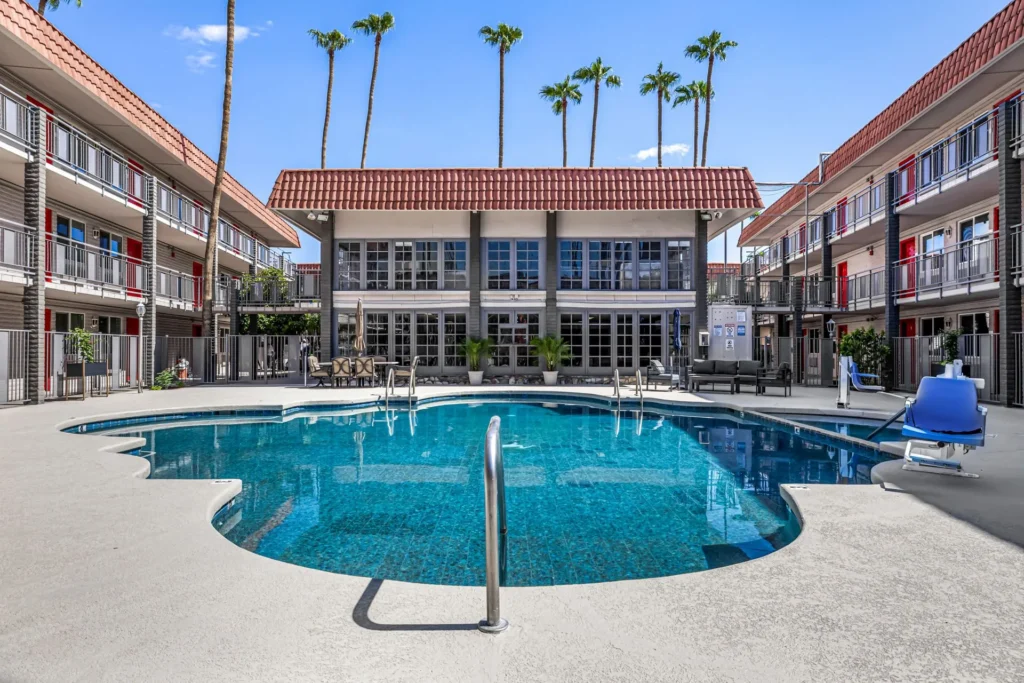
The Tempe City Council held a second and final public hearing June 25 on a Planned Area Development Overlay that would allow the adaptive reuse of a motel at Tempe OASIS into multi-family housing.
The proposal, taken up as item 8C1 on the council's meeting agenda, would establish development standards for a PAD overlay in the MU-4 (Mixed Use-4) district for the Tempe OASIS site. The project involves converting an existing motel property into residential apartments through adaptive reuse—a strategy the city has been encouraging to add housing supply more quickly than new construction.
An adaptive-reuse conversion typically requires zoning relief because motel layouts, unit sizes, parking configurations, and common areas differ from conventional multi-family development standards. The PAD overlay creates a tailored regulatory framework for the specific property, allowing the city council to approve density, setbacks, and design standards that differ from the base MU-4 zoning while still requiring compliance with the general plan and development code.
Also on the June 25 agenda, the council held a second and final public hearing for item 8C2, a Zoning and Development Code Text Amendment. Text amendments modify the city's development regulations without applying to a specific property; the changes apply citywide and can address anything from parking standards to landscaping requirements to procedural rules.
In separate business, the council adopted a resolution approving item 8A2, authorizing the issuance of multifamily housing revenue bonds through the Industrial Development Authority of the City of Tempe. The bonds are a financing mechanism that allows private developers of multi-family housing projects to access tax-exempt bond financing, typically resulting in lower borrowing costs that can translate to more affordable rent levels.
The Tempe OASIS adaptive-reuse project and the PAD overlay were on the agenda for second and final reading.